About Feeder Pillar
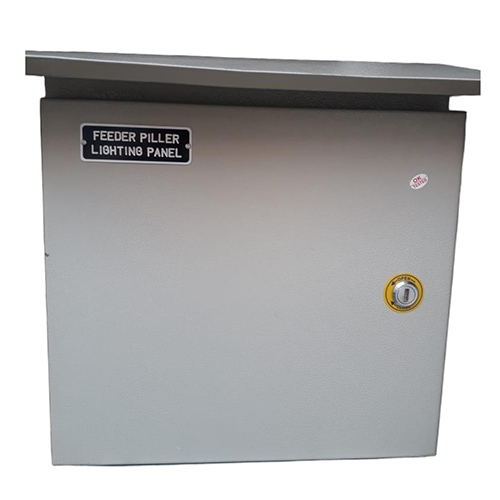
A feeder pillar is an outdoor electrical cabinet used to distribute and control electricity from a main power supply to various circuits in a safe and organized manner. It serves as a central point for connecting electrical systems and is commonly found in commercial, industrial, and public infrastructure applications such as street lighting, parks, residential complexes, and substations.
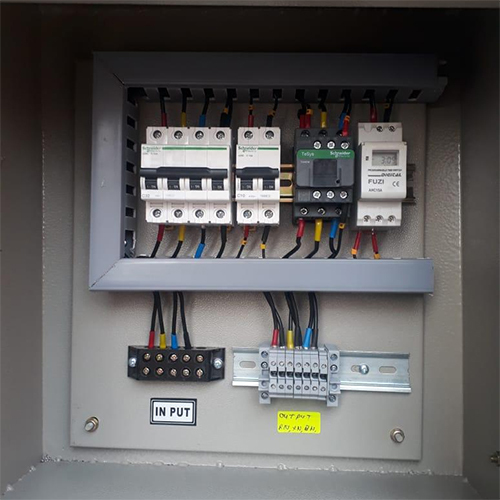
Constructed from durable materials like galvanized steel or weather-resistant enclosures, the feeder pillar is designed to withstand harsh environmental conditions including rain, dust, and heat. It houses components such as circuit breakers, fuses, relays, contactors, terminal blocks, and meters, all arranged in a structured layout for easy access and maintenance.
The main function of a feeder pillar is to protect electrical circuits by safely distributing electricity and isolating faulty sections during overloads or short circuits. This improves system reliability and safety. It allows operators to control and monitor different circuits from a single location, making it easier to manage power distribution in large areas.
Feeder pillars come in various sizes and configurations depending on the specific load and application requirements. Some are custom built to include features like timers, surge protection, and energy meters for monitoring power consumption. The internal wiring is organized to reduce the risk of faults and ensure efficient operation.
Installation of a feeder pillar involves anchoring the cabinet on a concrete base and connecting it to the main power supply and outgoing circuits. It must comply with electrical safety standards and be installed by qualified professionals.
Feeder pillars play a critical role in ensuring safe, reliable, and flexible power distribution. Their strong construction, protection features, and adaptability make them essential components in modern electrical infrastructure.
Advanced Safety and ReliabilityThis feeder pillar prioritizes safety with its three-point locking system, insulated neutral and earth bars, and a rust-resistant, powder-coated finish. The IP55-rated enclosure and mild steel construction provide weatherproof and tamper-resistant protection, ensuring reliable performance in Indian outdoor conditions.
Flexible Customization for Every NeedAvailable in 4, 6, or 8 way configurations and customizable dimensions, this unit is adaptable for various distribution requirements. Top or bottom cable entries and multiple panel sizes allow seamless integration into both new and existing infrastructure.
Simple Maintenance and OperationRoutine checks and manual operation are straightforward thanks to the transparent glass windows and easy-access panel design. Its analog display and cable terminal connections ensure simple and efficient monitoring, while natural air ventilation helps maintain system longevity.
FAQs of Feeder Pillar:
Q: How is the feeder pillar installed in outdoor environments?
A: The feeder pillar can be mounted either on the floor or directly onto a surface, allowing versatile placement on site. Weatherproof and IP55-rated, it is suitable for exposed areas, with secure glanded cable entries at the top or bottom.
Q: What are the safety features included in this feeder pillar design?
A: Key safety elements include a three-point door locking mechanism, tamper-proof enclosure, Class I protection, transparent glass windows for safe monitoring, and compliance with IEC 61439/IS 8623 standards.
Q: When should I choose copper versus aluminum busbar material?
A: Copper busbars provide superior conductivity and are ideal for installations requiring high efficiency and reliability, while aluminum busbars offer a cost-effective solution for standard applications. Your selection will depend on your specific technical and budgetary requirements.
Q: Where can this product be used most effectively?
A: This feeder pillar is well-suited to outdoor power distribution in residential, commercial, and industrial settings across India due to its weather-resistant construction and robust safety features.
Q: What is the process for routine maintenance of the feeder pillar?
A: Routine maintenance involves visual inspection through the glass window, checking busbar integrity, and verifying that fuse switches and MCCBs function correctly. The easy access design and natural ventilation further streamline regular upkeep.
Q: What are the primary benefits of using this specific feeder pillar?
A: Users benefit from enhanced protection against the elements, reliable high-capacity distribution (up to 630A), flexible configuration, simple maintenance, and a long-lasting, rust-resistant finish.





 Send Inquiry



 Send Inquiry
 Send Inquiry
 Send SMS
 Call Me Free